
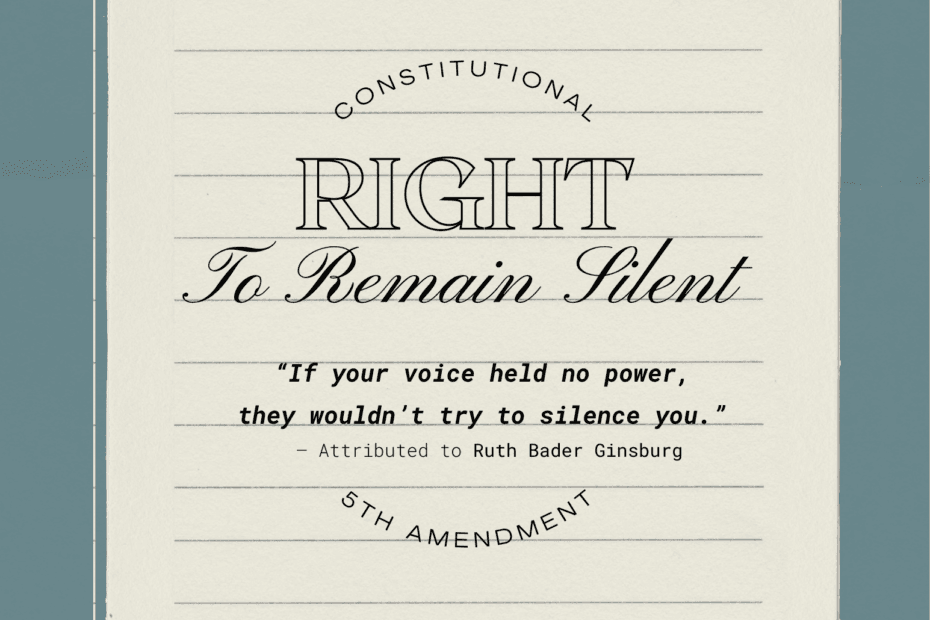
When Do You Assert the Right to Remain Silent? When Do You Assert Victims’ Rights?
Constitutional Foundation Behind the 5th Amendment vs. Marsy’s Law Victims’ Rights Amendment:
One of the most difficult realities in criminal investigations is that people do not always realize how law enforcement views them at the beginning of an investigation.
This is especially true in domestic violence cases, where emotions are high, allegations are conflicting, and officers often arrive after an incident has already escalated. In many situations, both parties believe they are the victim. Yet law enforcement may still identify one individual as the primary aggressor based on statements, visible injuries, witness accounts, or incomplete information gathered at the scene.
In “he said/she said” cases, individuals frequently speak to police believing they are simply explaining what happened or asserting their rights as a victim, only to later discover they themselves became the focus of the criminal investigation.
That is why understanding constitutional protections matters.
The right to remain silent is not an admission of guilt. It is a constitutional safeguard designed to protect individuals before facts are fully evaluated and before legal counsel has had an opportunity to assess the situation.
At the same time, legitimate victims have constitutional and statutory rights that deserve protection, dignity, and respect under laws such as Marsy’s Law.
The challenge in many domestic violence investigations is that the legal system must determine:
- who may need constitutional protection from self-incrimination,
- who may qualify for victims’ rights protections,
- and whether both issues are unfolding simultaneously in a rapidly evolving investigation.
For that reason, individuals should be cautious about making detailed statements to law enforcement without first understanding their legal position and rights.
At our firm, we further recognize that constitutional protections are often most important in legally complex situations where the facts are disputed, emotions are heightened, and the roles of “victim,” “witness,” and “accused” may not yet be clear.
Protecting constitutional rights does not undermine victims’ rights. Both exist to preserve fairness, accuracy, and integrity within the justice system.
At our firm, we believe constitutional rights are not competing interests, they are complementary protections that preserve fairness, dignity, and justice for everyone involved in the legal process.
The Constitution was designed to protect both the accused and the harmed. While the Fifth Amendment safeguards individuals from self-incrimination and government overreach, Marsy’s Law ensures victims are treated with dignity, respect, and inclusion throughout criminal proceedings.
Respecting one constitutional right should never require diminishing another.
The 5th Amendment: The Right to Remain Silent
The phrase “You have the right to remain silent” is one of the most recognized constitutional protections in American history. Rooted in the 5th Amendment to the United States Constitution, this right protects individuals from being compelled to testify against themselves in criminal matters.
The 5th Amendment states, in part:
“No person… shall be compelled in any criminal case to be a witness against himself…”
This constitutional safeguard was created to prevent coerced confessions, government abuse, and unfair prosecutions. It recognizes a fundamental principle of justice: the burden of proof belongs to the government, not the accused.
The right to remain silent became deeply embedded in American legal culture following the landmark 1966 Supreme Court decision Miranda v. Arizona, which required law enforcement officers to inform individuals of their constitutional rights during custodial interrogation.
These protections are not technical loopholes. They are constitutional guarantees intended to preserve due process, fairness, and the integrity of the justice system itself.
Strategic Silence Is a Constitutional Right: Not an Admission of Guilt
Remaining silent is often misunderstood by the public. In reality, invoking the 5th Amendment is a lawful constitutional protection that attorneys frequently advise clients to exercise strategically.
Silence cannot legally be used as proof of guilt. Instead, it serves as a safeguard against:
- Misstatements made under pressure
- Incomplete or misunderstood facts
- Coercive interrogation tactics
- Self-incrimination without counsel present
Constitutional rights exist precisely for moments when emotions, fear, confusion, or pressure are at their highest.
At our firm, we educate clients on exercising constitutional protections responsibly while ensuring they fully understand the legal process ahead.
Marsy’s Law: Expanding Constitutional Rights for Victims
While the 5th Amendment protects the accused, Marsy’s Law was created to strengthen constitutional protections for crime victims.
Marsy’s Law originated after the 1983 murder of Marsalee “Marsy” Nicholas in California. Just days after her death, Marsy’s family unexpectedly encountered the accused offender in public because they had not been notified of his release from custody.
That tragedy sparked a victims’ rights movement that ultimately led to California voters passing Marsy’s Law in 2008 as a Constitutional Amendment.
Marsy’s Law expanded rights for victims by providing:
- The right to notification of court proceedings
- The right to be heard during critical stages of prosecution
- The right to restitution
- The right to protection and privacy
- The right to dignity and respect throughout the criminal justice process
The amendment reflected a growing recognition that victims, too, deserve constitutional consideration within the justice system.
Constitutional Protections Can Coexist
Public discourse often frames constitutional rights as though protecting one side somehow harms the other. But the Constitution was never intended to function that way.
The Fifth Amendment and Marsy’s Law address different constitutional concerns:
- One protects individuals from government overreach and compelled self-incrimination
- The other protects victims from exclusion, neglect, and procedural invisibility
Both rights are rooted in fairness.
Both rights are constitutional.
Both deserve respect.
A justice system that honors constitutional protections for everyone is stronger, more balanced, and more credible.
Our Firm’s Commitment
At our firm, we respect the full constitutional framework of the legal system.
We believe:
- Constitutional rights matter
- Due process matters
- Victims’ rights matter
- Strategic legal protection matters
- Dignity and fairness matter
Whether protecting a client’s 5th Amendment rights or advocating for respectful treatment under victims’ rights laws, our commitment remains the same: ensuring the legal process operates fairly, ethically, and constitutionally.
Because justice is strongest when constitutional rights are protected for all.
#MarsysLaw#ConstitutionalRights#RightToRemainSilent#CriminalDefenseAttorney#DUIDefense#FifthAmendment#DueProcess#VictimsRights#MirandaRights#JusticeForAll#CaliforniaLaw#DUIAttorney#CriminalDefense#KnowYourRights#DefenseLawyer#LegalEducation#TrialAttorney#VictimAdvocacy#ConstitutionalLaw#JusticeSystem#tracycatherinemiller#formerprosecutor#formerdeputydistrictattorney#harborjusticecenter#newportbeach